 >
>Compromise of 1850
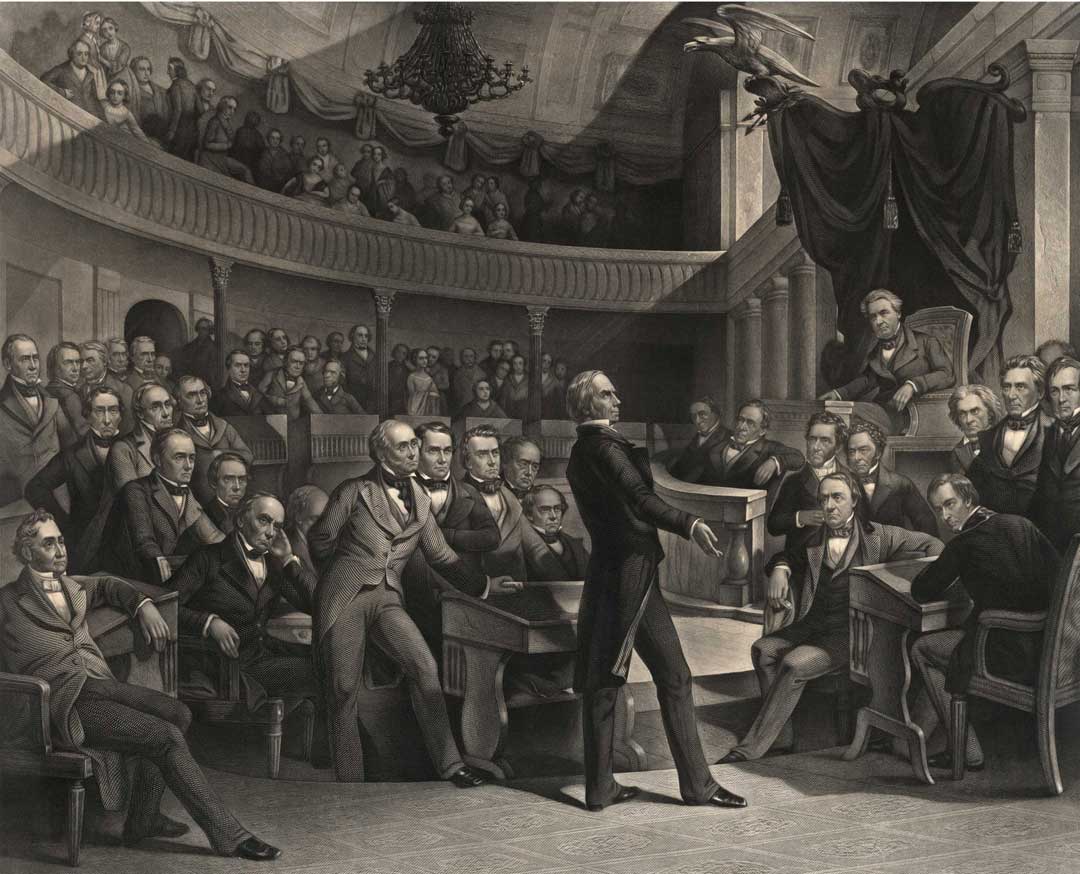
Clinton
Thanks to this compromise, civil war was avoided. Under the terms fo the compromise, California was admitted to the Union as a free state. Residents of the Other territories acquired from Mexico were to decide for themselves whether to be free or slave states. The Fugitive Slave Act was passed requiring the return of slaves. Slave trade was outlawed in the District of Columbia, and Texas' national debt was paid off.
The Compromise of 1850 held the Union together for another difficult ten years. The dispute was over the admittance of additional states into the Union, while maintaining the balance between free and slave states.
The immediate question was the clamoring of California to be admitted to the Union as a free state. The debate was begun by a frail Senator Henry Clay, who called for a compromise between the North and South. Senator John C. Calhoun, who was dying of tuberculosis, gave his last speech in the Senate; in which he once again championed the cause of the South, yet called for compromise.
Finally, Daniel Webster, who had been a leading spokesmen for Northern interests, made a plea for compromise in order to preserve the Union. It was Webster who tilted the balance, as his call for compromise convinced many Northerners to agree to the concessions, primarily the Fugitive Slave Law, that allowed the Senate to pass the compromise.
President Taylor opposed the compromise, but after his untimely death, his successor supported these bills, and thus the compromise was sealed.