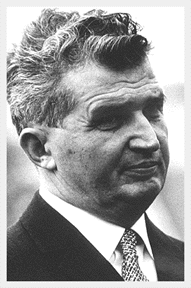
Nicolae Ceaușescu was the Communist dictator who ruled Romania with increasing megalomania for nearly a quarter century before being overthrown and executed in the revolutions of 1989. Born to a peasant family, he joined the Communist movement as a youth, was imprisoned in the interwar years, and rose through the party after the Second World War to become Romania's leader in 1965.
At first Ceaușescu won a measure of admiration in the West for his independent foreign policy, defying Moscow by condemning the 1968 invasion of Czechoslovakia and cultivating ties with Western and non-aligned nations. For a time he was courted as a maverick within the Soviet bloc.
At home, however, his rule grew ever more oppressive and bizarre. He built a pervasive police state enforced by the dreaded Securitate, promoted an extravagant personality cult that glorified him and his wife Elena, and pursued ruinous policies — bulldozing villages, demolishing much of historic Bucharest to build a colossal palace, and exporting food to pay off foreign debt while his people endured cold, hunger, and rationing.
By the late 1980s, with the country impoverished and resentment seething, Romania was ripe for revolt. In December 1989, as communism collapsed across Eastern Europe, protests erupted into revolution. Ceaușescu and his wife fled but were captured, hastily tried by a military tribunal, and shot on Christmas Day — the only leaders of the 1989 revolutions to meet a violent end.