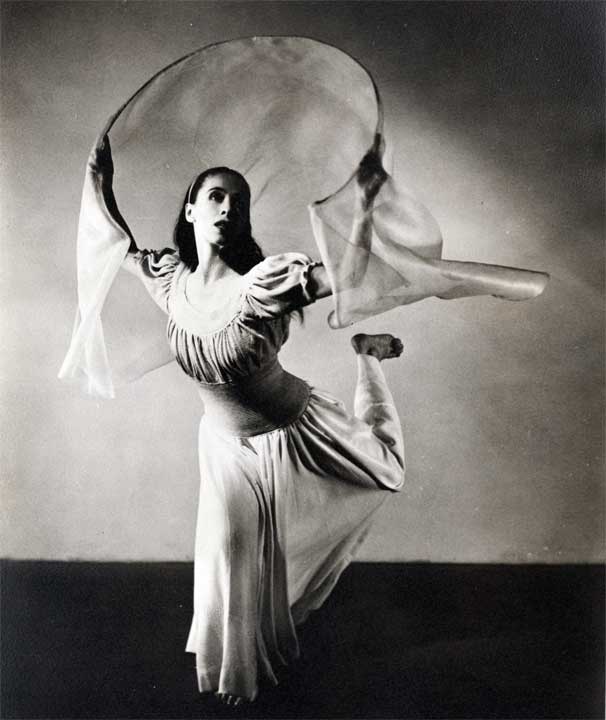
Martha Graham was the most influential figure in the history of American modern dance, a revolutionary dancer and choreographer whose powerful, emotionally charged style transformed the art form and shaped it for generations. Born in Pittsburgh, she came to dance relatively late, training in California before moving to New York to begin her career.
Rejecting the formal conventions of classical ballet, Graham forged an entirely new vocabulary of movement, rooted in the dynamics of breathing — her famous principle of "contraction and release" — and designed to express the depths of human emotion and inner experience. Her angular, percussive, deeply expressive choreography looked unlike anything audiences had seen and at first shocked and divided them.
Over a career spanning more than half a century, Graham created nearly two hundred works, many drawing on Greek mythology, American history, and psychological themes, with strong roles for women at their center. Masterpieces such as Appalachian Spring — set to a celebrated score by Aaron Copland — and Night Journey became landmarks of modern dance.
She founded a school and company that trained and influenced countless dancers and choreographers, spreading her methods around the world; her technique became a foundation of modern-dance education. A commanding and charismatic figure, Graham danced into her seventies and continued to choreograph almost until her death in 1991, having earned recognition as one of the foremost American artists of the century.