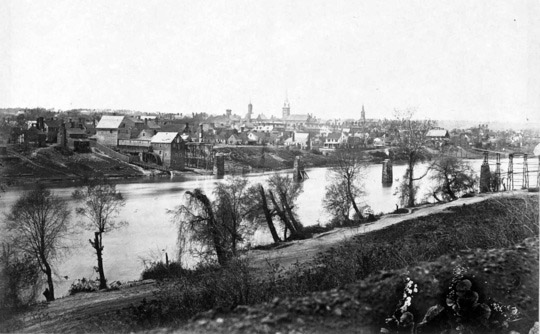
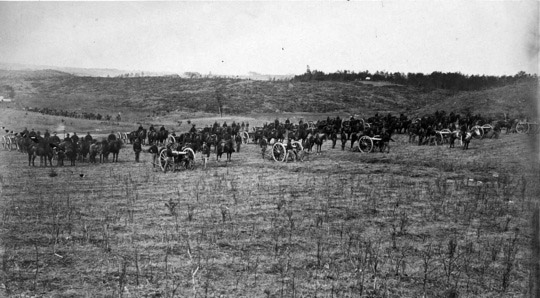
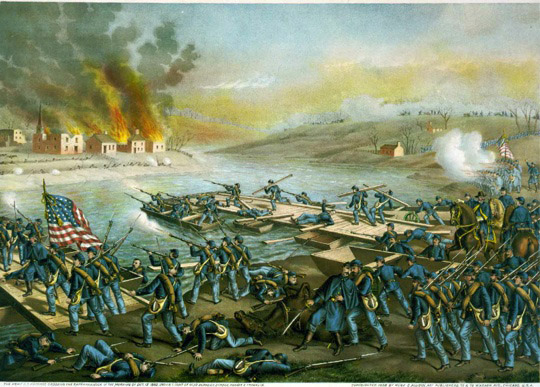
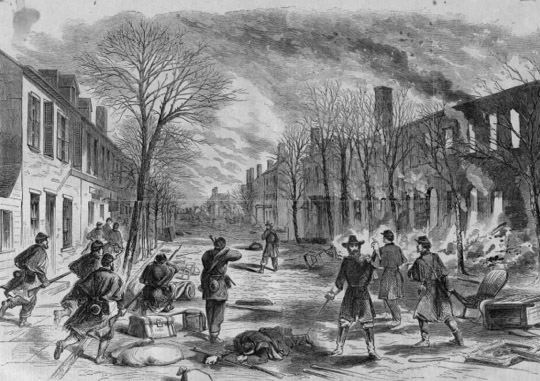
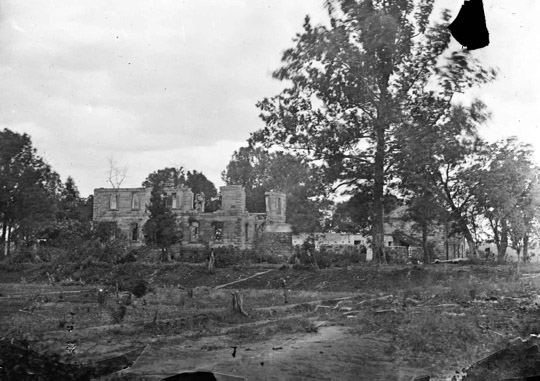
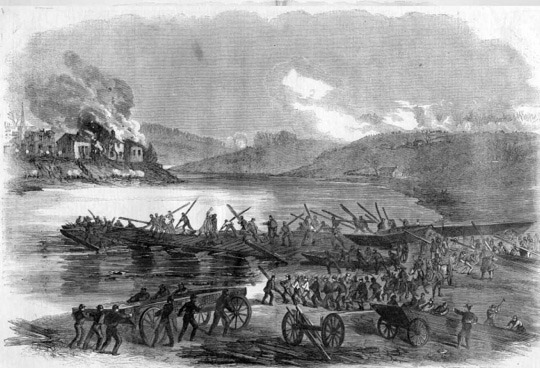
On the morning of December 13th, Union troops began an assault on Confederate line. South of the town, four divisions under General William Franklin attacked the troops under General Jackson. Well placed Confederate artillery managed to blunt the Union's assault.
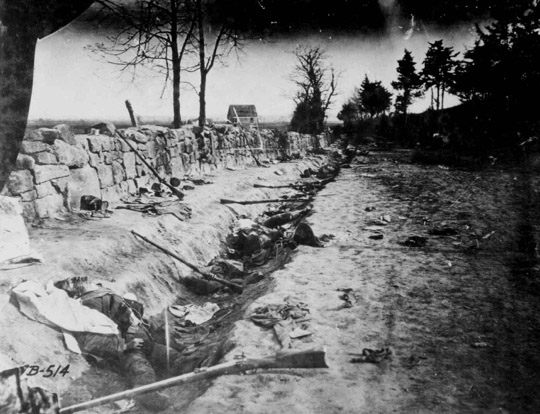
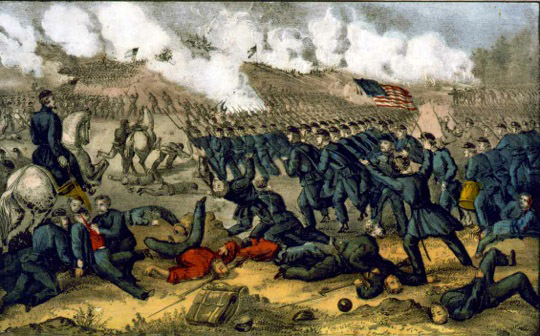
The main Union assault was commanded by General Hooker. His goal was to capture Marye's Heights. Many of Burnside's officers opposed the assault. They claimed Marye's Heights would be impossible to capture in a frontal assault. They were right. Seven separate Union divisions, attempted to scale the Marye's Heights. Each assault was halted in its tracks.
A Confederate officer, William Miller Owens, describes the scene: "The enemy, having deployed, now showed himself above the crest of the ridge and advanced in columns of brigades, and at once our guns began their deadly work with shell and solid shot. How beautifully they came on! Their bright bayonets glistering in the sunlight made the line look a huge serpent of blue and steel. The very force of their onset leveled the broad fences bounding the small fields and gardens that interspersed the plain. We could see our shells bursting in their ranks, making great gaps; but on they came, as though they would go straight through and over us. Now we gave them canister, and that staggered them. A few more paces onward and the Georgians in the road below us rose up, and, glancing an instant along their rifle barrels, let loose a storm of lead into the faces of the advance brigade. This was too much; the column hesitated, and then turning, took refuge behind the bank."
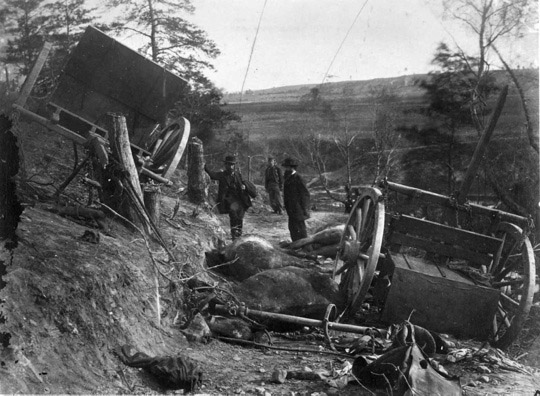
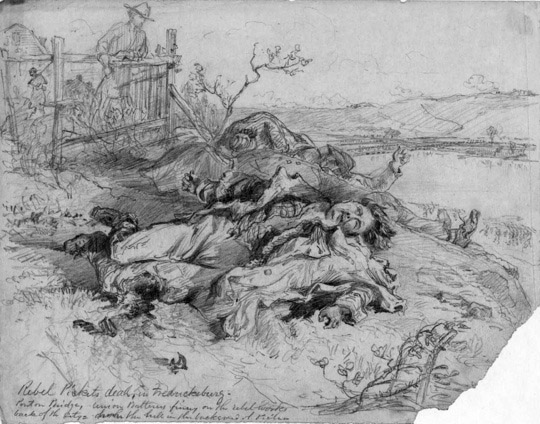
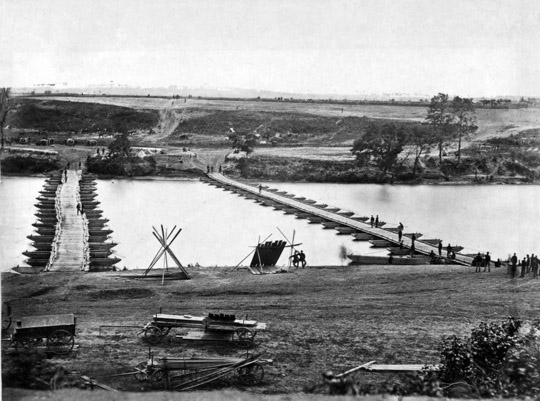
Thousands of Union men were trapped on the fields leading to the heights. All night the dying lay untended on the battlefield. With staggering Union casualties, General Burnside ordered a general withdrawal back across the river. Union casualties totaled 12,653, while Confederate casualties stood at 5,377 losses.