Boeing B-17 Flying Fortress
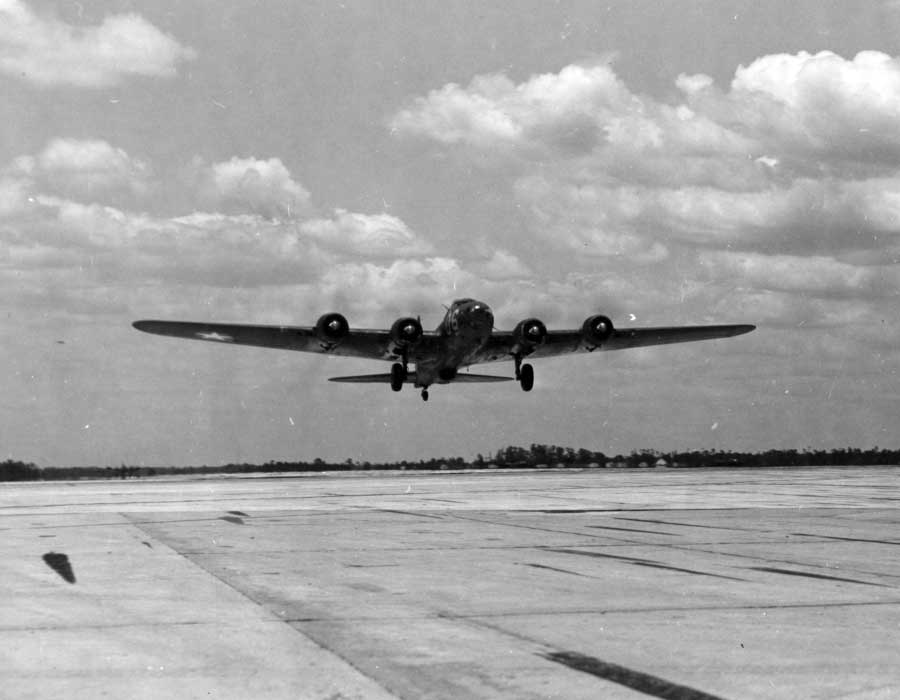
The Boeing B-17 Flying Fortress was a four-engine heavy bomber and the mainstay of the US Army Air Forces' strategic bombing campaign over Europe. First flown in 1935, it entered widespread service in 1941–42 and began daylight precision raids against Germany in 1942. Heavily armed with multiple defensive machine guns and famous for its ability to absorb battle damage and return home, the B-17 flew with the Eighth Air Force from England in massed formations and later from the Mediterranean.
Production was shared among Boeing, Douglas, and Lockheed (Vega), and about 12,700 were built. The Flying Fortress became a symbol of American air power; its crews suffered heavy losses in the unescorted early raids before long-range escort fighters turned the air war in the Allies' favor.
Specifications
- Manufacturer
- Boeing (also built by Douglas and Lockheed/Vega)
- Type
- Four-engine heavy bomber
- Crew
- 10
- First Flight
- 1935
- Powerplant
- 4 × Wright R-1820 Cyclone radials, 1,200 hp each
- Max Speed
- 287 mph
- Range
- 2,000 mi (with bomb load)
- Service Ceiling
- 35,600 ft
- Length
- 74 ft 4 in
- Wingspan
- 103 ft 9 in
- Loaded Weight
- 65,500 lb (max takeoff)
- Armament
- 13 × .50 in machine guns; up to 8,000 lb of bombs (typical)