F-4 Phantom Unveiled
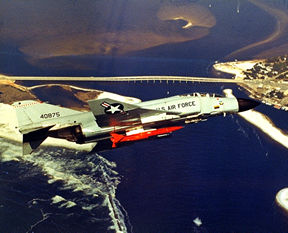
The F-4 Phantom II entered United States Navy service in 1961 as the premier carrier-based fleet defense fighter, its enormous twin General Electric J79 engines and powerful Hughes radar fire control system giving it an intercept capability that no Soviet aircraft of the era could match at altitude. The Air Force followed with its own procurement, and by the time the United States committed combat forces to Vietnam in 1965 the Phantom had become the frontline American combat aircraft across all three services — flying air superiority missions over North Vietnam, close air support over the South, and strategic strike missions against heavily defended targets that exposed the aircraft to some of the most intense antiaircraft defenses since World War II.
The Vietnam experience was both a vindication of the Phantom's capabilities and a sobering education in its limitations: the original F-4 had been designed without an internal gun on the theory that missile technology had made the gun obsolete, a theory that the chaotic close-range engagements over North Vietnam rapidly disproved and that led to the installation of a gun pod and eventually an internal M61 cannon in later variants.
The lessons of Vietnam were absorbed into successive upgrades that kept the Phantom competitive well beyond what anyone had anticipated when it first flew in 1958. The F-4's international career was as distinguished as its American service, and nowhere more so than in Israel, where the Phantom became the backbone of the Israeli Air Force from its introduction in 1969. Israeli Phantom crews flew the aircraft with exceptional skill against Egyptian, Syrian, and Jordanian opponents, and when Egypt and Syria launched their surprise assault on Yom Kippur — October 6, 1973 — it was the F-4 that bore the heaviest burden of Israel's air response, flying around the clock in both air superiority and ground attack roles under conditions of extreme danger from Soviet-supplied surface-to-air missiles that inflicted painful losses.
Israel's determination to keep the Phantom relevant long after its American contemporaries had retired it led to the ambitious Phantom 2000 upgrade program, which equipped surviving Israeli F-4s with modern avionics, new radar, and updated systems that extended their operational life well into the twenty-first century — a testament to the fundamental soundness of a design conceived in the 1950s. In the United States, the Phantom's final operational role was the Wild Weasel mission — suppression of enemy air defenses using specialized anti-radiation missiles to destroy radar-guided SAM systems — a role in which the F-4G Wild Weasel served with great effectiveness in Operation Desert Storm in 1991 before the last American F-4s were finally retired from active service, closing the chapter on a fighter that had defined an era of aerial warfare as completely as any aircraft before or since.