Consolidated B-24 Liberator
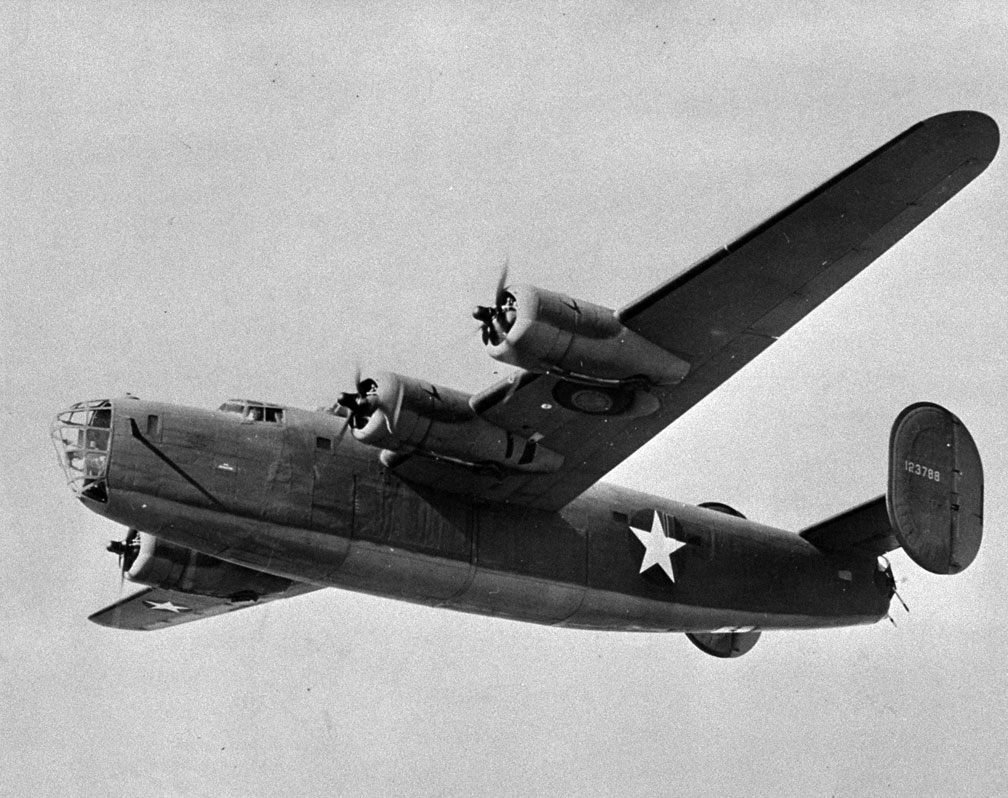
The Consolidated B-24 Liberator was a four-engine heavy bomber that became the most-produced American military aircraft of World War II, with more than 18,000 built. First flown in 1939, it featured a high-aspect-ratio Davis wing that gave it greater range and bomb load than the B-17, at the cost of being harder to fly and less able to absorb damage. The Liberator served in every theater in roles ranging from high- and low-level bombing to long-range maritime patrol and transport.
It is especially remembered for the dramatic low-level raid on the Ploesti oil refineries in 1943 and for closing the mid-Atlantic gap against German U-boats. Built by Consolidated and several partner plants, it equipped American, British, and other Allied air forces throughout the war.
Specifications
- Manufacturer
- Consolidated
- Type
- Four-engine heavy bomber
- Crew
- 10
- First Flight
- 1939
- Powerplant
- 4 × Pratt & Whitney R-1830 Twin Wasp radials, 1,200 hp each
- Max Speed
- 297 mph
- Range
- 2,100 mi (with bomb load)
- Service Ceiling
- 28,000 ft
- Length
- 67 ft 8 in
- Wingspan
- 110 ft
- Loaded Weight
- 65,000 lb (max takeoff)
- Armament
- 10 × .50 in machine guns; up to 8,000 lb of bombs