Lindbergh Flies Across the Atlantic
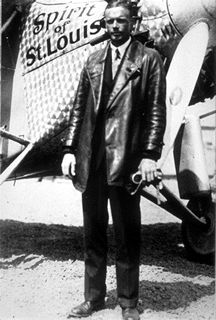
On the rainy morning of May 20, 1927, twenty-five-year-old Charles Augustus Lindbergh — a lanky, little-known U.S. Air Mail pilot from Minnesota who held a reserve commission as a captain in the Army Air Corps — climbed into the cockpit of a custom-built Ryan NYP monoplane at Roosevelt Field on Long Island. The Spirit of St. Louis was designed by Donald Hall and built by Ryan Airlines staff in San Diego in just 60 days, working closely with Lindbergh to his specifications.
Powered by a single Wright Whirlwind J-5C radial engine producing 223 horsepower, the aircraft had been stripped to essentials for maximum range: the standard five-passenger cabin was given over almost entirely to fuel tanks holding 425 gallons, and the windshield was replaced by an extension of the nose cowling, leaving Lindbergh with only side windows and a small periscope for forward visibility. A group of St. Louis businessmen and aviation supporters had pooled their resources to provide Lindbergh with funding to purchase the airplane, backing his bid to win the $25,000 Orteig Prize, which the New York hotelier Raymond Orteig had offered in 1919 for the first nonstop flight between New York and Paris.
Several aviators had already died or been seriously injured attempting the crossing. Lindbergh's plane was so loaded down with fuel that it barely cleared the telephone wires at the end of the runway, and the small crowd of 500 spectators who had gathered in the drizzle thought they had witnessed a miracle simply in his getting airborne. Lindbergh flew northeast along the coast, crossing over Nova Scotia and Newfoundland before heading out over the open Atlantic.
He navigated by "dead reckoning" — using only a compass and instruments, without radio, maps, or landmarks — across the featureless ocean. He had not slept the night before departure, and his greatest enemy over the long hours was not weather or mechanical failure but crushing fatigue. He had to hold his eyelids open with his fingers and hallucinated ghosts passing through the cockpit. He skimmed storm clouds at 10,000 feet and wave tops as low as 10 feet, flew blind through fog for hours, and fought icing on the wings.
Twenty-seven hours after leaving Roosevelt Field, he saw signs of life — porpoises and fishing boats — that told him he had reached the far side of the Atlantic. He made landfall at Dingle Bay on the southwestern coast of Ireland, less than three miles off course, a remarkable feat of navigation across 1,800 miles of open ocean. He continued over England, crossed the Channel, and followed the lights of the Paris-London airway toward Le Bourget Aerodrome.
After a flight of 33 hours, 30 minutes, and 30 seconds, covering 3,610 miles, Lindbergh landed at Le Bourget at 10:22 p.m. Paris time on May 21, having not slept in over 55 hours. A crowd estimated at 150,000 stormed the field, dragged Lindbergh out of the cockpit, and carried him around above their heads for nearly half an hour. The impact of Lindbergh's flight was immediate and electrifying. Not until the Apollo 11 moon landing in 1969 was the entire world again as enthusiastic about an aviation event as it was when Lindbergh landed his little Ryan monoplane in Paris.
President Calvin Coolidge dispatched the cruiser USS *Memphis* to bring Lindbergh home and awarded him the Distinguished Flying Cross. New York City gave him the largest ticker tape parade ever, with four million people lining the route, and he was instantly dubbed "The Lone Eagle" and "Lucky Lindy." More profoundly, the flight transformed public attitudes toward aviation: it demonstrated that the airplane was not merely a novelty or a weapon of war but a practical instrument capable of spanning oceans and connecting continents.
In the months that followed, Lindbergh flew the Spirit of St. Louis on goodwill tours across the United States, Latin America, and the Caribbean, promoting commercial aviation at every stop. On April 30, 1928, the Spirit of St. Louis made its final flight — from St. Louis to Washington, D.C., where Lindbergh presented the aircraft to the Smithsonian Institution, where it hangs today in the National Air and Space Museum, one of the most iconic artifacts in the history of flight.