Igor Sikorsky Flies a Helicopter
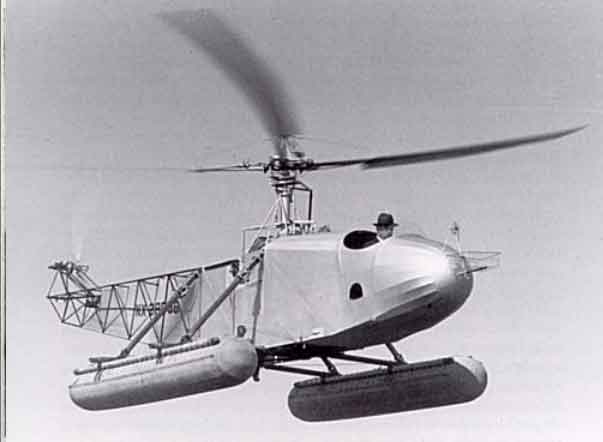
On September 14, 1939, Russian-born aviation pioneer Igor Sikorsky lifted the VS-300 off the ground at the Vought-Sikorsky aircraft plant in Stratford, Connecticut, in a tethered hover that lasted only a few seconds — but those seconds contained the blueprint for virtually every helicopter built in the eighty-plus years since. Sikorsky was no newcomer to rotary-wing aviation; he had been fascinated by the concept since his youth in Kyiv, where he had built unsuccessful helicopter models as a teenager before turning his attention to fixed-wing aircraft and eventually emigrating to the United States following the Russian Revolution.
The VS-300 was not technically the first helicopter to achieve flight — German professor Heinrich Focke had demonstrated a functional twin-rotor design, the Focke-Wulf Fw 61, in 1936, and the broader field of rotary-wing aviation had been populated for years by various autogiro designs that used unpowered overhead blades for lift while relying on conventional propellers for forward thrust. What distinguished Sikorsky's machine from all of its predecessors was its configuration: a single large main rotor providing both lift and directional control, combined with a small tail rotor mounted vertically at the rear of the fuselage to counteract the torque that the main rotor would otherwise impart to the body of the aircraft.
That configuration — main rotor plus tail rotor — was Sikorsky's defining contribution to aviation history, and it proved so elegantly practical that it remains the dominant design for helicopters worldwide to this day. The VS-300 itself was a crude and temperamental machine in its early form, an open framework of steel tubing with Sikorsky himself typically at the controls wearing his characteristic business suit and fedora, and it went through numerous modifications over the following two years as its designer refined the control systems and power plant.
By 1941 it had set a world helicopter endurance record of one hour, thirty-two minutes, and twenty-six seconds, demonstrating that sustained and controllable rotary-wing flight was no longer a laboratory curiosity but an engineering reality. The United States military took notice, and the helicopter that followed the VS-300 — the Sikorsky R-4 — became the world's first mass-produced helicopter and saw service with American forces in the final years of World War II, performing the first combat search-and-rescue missions in Burma and Alaska.
The industry that grew from those tethered seconds above a Connecticut airfield now encompasses military gunships, offshore oil platform supply, emergency medical evacuation, and urban air transport — a legacy that makes Igor Sikorsky's VS-300 one of the most consequential aircraft ever built.